51% of Web Traffic is Bots: What This Means for Your Contact Forms
Half of all web traffic is automated bots. Learn which bot types target forms, how to detect attacks, and proven strategies to protect your contact forms from spam and abuse.
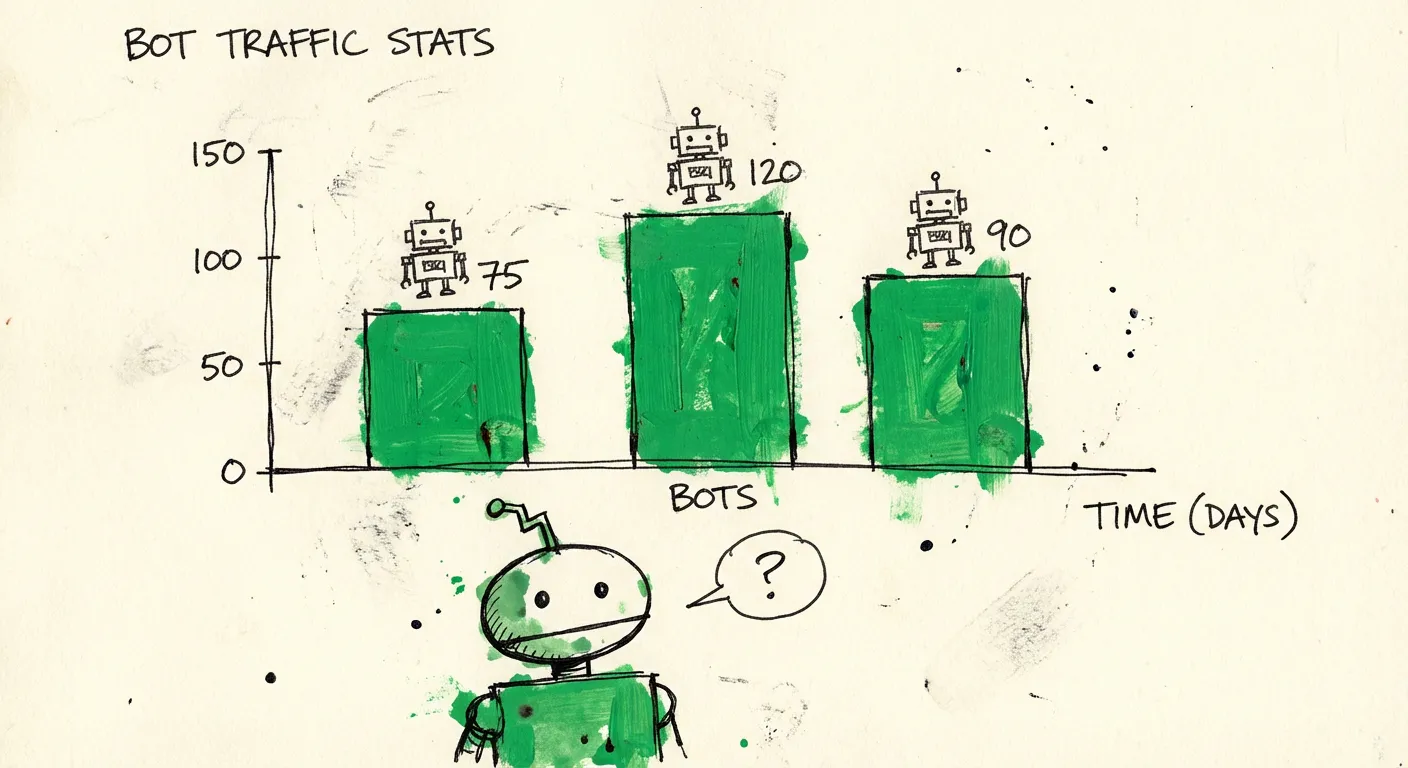
The internet is drowning in bots. According to Imperva’s 2024 Bad Bot Report, bots now comprise 51% of all web traffic. More concerning? 37% of that bot traffic is classified as malicious—and your contact forms are a primary target.
For businesses relying on contact forms for lead generation, customer support, or user engagement, this statistic isn’t just alarming—it’s a call to action. In this post, we’ll break down what the bot explosion means for your forms and share practical defense strategies.
The Bot Landscape in 2025
Not all bots are created equal. The 51% figure masks a complex ecosystem of automated traffic:
Good bots (62% of bot traffic): Search engines, monitoring services, analytics bots, and legitimate automation tools that serve legitimate purposes.
Bad bots (37% of bot traffic): The malicious actors. These include spambots, credential stuffers, scraper bots, and competitor intelligence gathering tools. This is the 19% of total web traffic actively working against your business.
For context, that means roughly 1 in 5 visitors to your website might be a malicious bot. On a site averaging 10,000 monthly visitors, expect 2,000 bot attacks per month.
How Bots Target Contact Forms Specifically
Your contact forms are high-value targets for several reasons:
Lead harvesting: Bots scrape form submissions to build email lists for phishing campaigns or spam networks. A single unprotected form can leak thousands of email addresses.
Spam injection: Automated submissions flood forms with promotional content, unrelated messages, or phishing links. This pollutes your data, wastes team resources on triage, and damages the user experience.
Bot network recruitment: Malicious actors test whether your forms are “alive” by submitting requests. If successful, your form URL is added to bot networks and targeted repeatedly.
Credential stuffing: For login or account forms, bots attempt to breach accounts using stolen username/password combinations from data breaches.
Content manipulation: Bots submit spam content designed to rank for SEO, pollute user-generated content sections, or manipulate community discussions.
The key advantage bots have over human spammers: speed and scale. A single bot can submit thousands of requests per hour, targeting multiple forms simultaneously.
Signs Your Forms Are Under Attack
How do you know if bots are targeting your forms? Look for these indicators:
Volume spikes: A sudden increase in form submissions that coincide with customer confusion (“I didn’t fill out this form”) is a red flag. Legitimate user volume typically follows predictable patterns.
Unusual data patterns: Form submissions with randomly generated names, nonsensical content, or obviously fake email addresses suggest automated submissions. Likewise, submissions from data centers or VPNs with no legitimate reason to use them.
Honeypot catches: If you’ve implemented honeypot fields (hidden form fields that legitimate users won’t fill), spikes in honeypot submissions directly indicate bot activity.
High bounce rates on form pages: Bots often trigger form validation checks multiple times, creating a pattern of repeated requests from the same IP within seconds.
Response header analysis: Check your server logs for rapid-fire requests from a single IP, repeated User-Agent strings typical of bot frameworks, or requests missing expected browser headers.
Timing anomalies: Submissions arriving at 3 AM, or 1,000 submissions in 30 seconds, suggest automation rather than human behavior.
Defense Strategies Overview
Protecting your forms requires a layered defense. No single technique catches all bots, but combining multiple approaches dramatically improves your odds:
1. Honeypot Fields
Add hidden form fields that legitimate users won’t see but bots will likely fill. This is free and effective against unsophisticated bots, though advanced bots can detect and skip them.
2. Rate Limiting
Cap the number of submissions from a single IP or session in a time window. This slows bot attacks but requires careful tuning to avoid blocking legitimate users (e.g., shared office networks).
3. Behavioral Analysis
Track form fill timing: humans take seconds to minutes; bots submit instantly. Monitor mouse movements, keyboard patterns, and submission timing to identify inhuman behavior.
4. IP Reputation Checking
Cross-reference submission IP addresses against threat databases to identify VPNs, data centers, and known malicious actors. This reduces false positives from legitimate users.
5. Email Validation
Verify emails against disposable email databases, check MX records, and validate domain age. Spammers frequently use throwaway email services.
6. CAPTCHA and Challenges
Require proof of humanity for suspicious submissions. CAPTCHAs are effective but hurt conversion rates, so use them selectively.
7. AI Content Analysis
Analyze form content for spam patterns, phishing language, and promotional markers. Modern language models can catch nuanced spam that rules-based systems miss.
The Comprehensive Approach: Content + Signals
Effective bot defense combines multiple signals to build a complete picture:
- Cheap, fast checks first: Honeypots and timing analysis are nearly instant and catch basic bots.
- Reputation data next: IP and email reputation checks filter known bad actors.
- Intelligent analysis last: Only analyze content from submissions that pass initial filters, reserving expensive operations for borderline cases.
This funnel approach is resource-efficient and catches both obvious and sophisticated attacks.
Why DIY Isn’t Enough
Building robust bot defense in-house requires integrating multiple third-party services (IP intelligence, email validation, content analysis), maintaining blocklists, handling false positives, and constant tuning. Most teams lack the infrastructure or expertise to do this well.
The alternative: a unified spam detection platform that combines all detection signals into a single API call.
Introducing FormShield
FormShield is a spam detection API purpose-built for contact forms. It combines IP intelligence, email validation, AI content analysis, and behavioral signals into a single endpoint returning a spam score and detailed breakdown.
Instead of wiring together five different services, one API call gives you:
- IP reputation: Detect VPNs, data centers, and threat actors
- Email validation: Identify disposable emails and spam traps
- Content analysis: Flag spam language and phishing attempts
- Behavioral signals: Detect impossible submission timing and bot patterns
- Configurable actions: Block, challenge, or review based on your risk tolerance
- Free tier: Start protecting your forms immediately (1,000 requests/month)
FormShield learns from every submission across its network, continuously improving detection without requiring you to tune rules or maintain blocklists.
Bottom Line
With 51% of web traffic being bots and 37% of that malicious, protecting your contact forms is no longer optional. The attack surface is real, the cost of inaction is high, and the solution is straightforward.
Start with honeypots and rate limiting if you haven’t already. But for comprehensive protection against today’s sophisticated bots, a unified spam detection API is the most efficient path forward.
Your contact forms are how leads find you. Don’t let bots steal them.